When you buy a house, you check the roof, the windows, the electrical, the plumbing. What’s easy to miss because it’s underground and invisible is the foundation. If the foundation is compromised, the whole building comes down. Everything above it
The Quantum Insider recently highlighted QuSecure’s listing of QuProtect R3 in the AWS Marketplace for the U.S. Intelligence Community (ICMP). The listing expands access to QuSecure’s cryptographic agility platform. Making it easier for federal agencies and intelligence organizations to deploy
Quantum Computing Report recently highlighted QuSecure’s listing of QuProtect R3 in the AWS ICMP Post-Quantum Cryptography Marketplace for the U.S. Intelligence Community (ICMP). The listing gives federal defense and intelligence organizations streamlined access to QuSecure’s cryptographic agility platform, helping accelerate
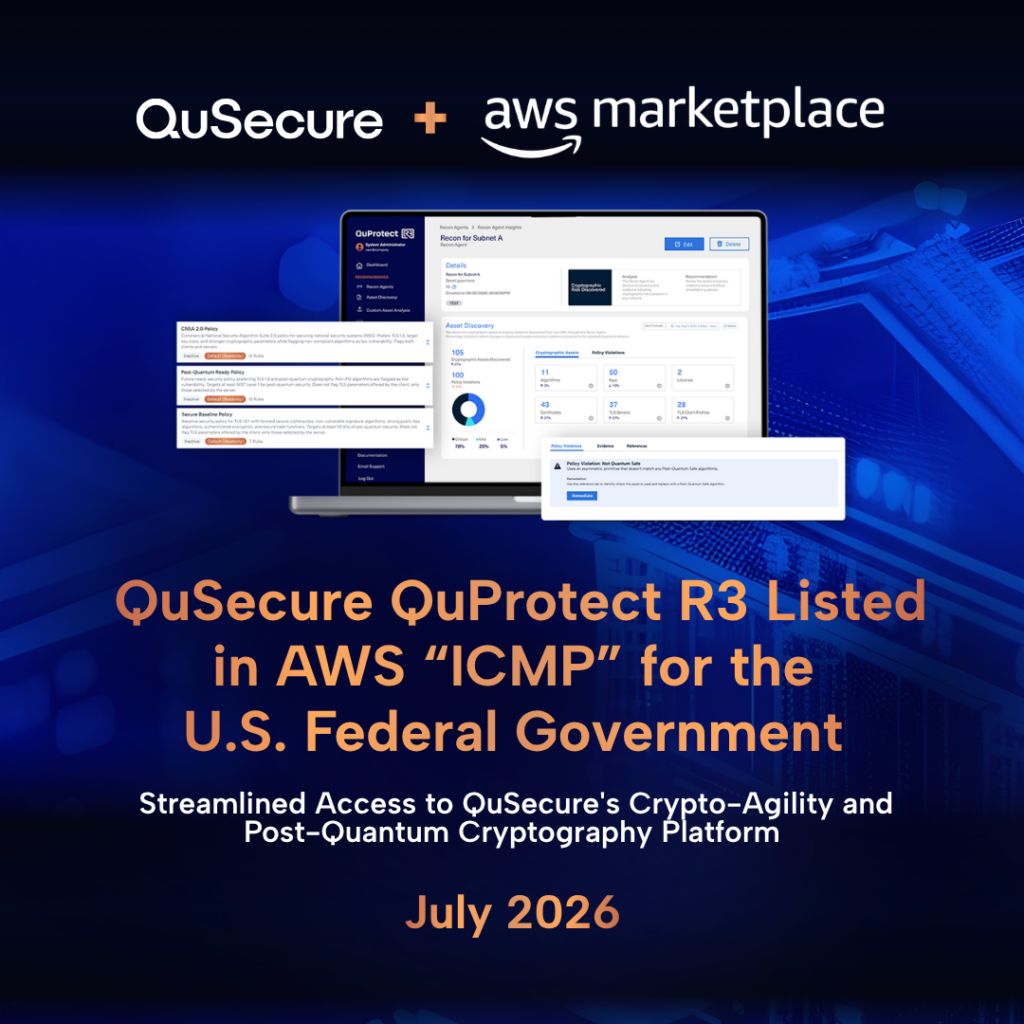
Availability Through AWS ICMP Gives Federal and Intelligence Community Organizations Streamlined Access to QuSecure’s Crypto-Agility and Post-Quantum Cryptography Platform SAN MATEO, Calif. — July 14, 2026 — QuSecure™, Inc., a post-quantum cryptography (PQC) and cryptographic-agility company helping organizations manage cryptographic
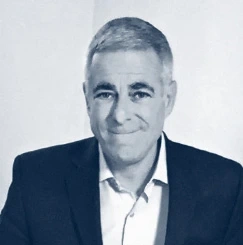
Intelligence Community News highlighted the appointment of retired U.S. Navy Rear Admiral Doug Small to QuSecure’s Federal Advisory Board as federal agencies accelerate their transition to quantum-resilient security. The article notes that Small joins QuSecure at a pivotal time. As
Rebecca Ilett, Forward Deployed Engineer at QuSecure Executive Summary The Office of Management and Budget (OMB) Memorandum M-26-15 recently gave federal agencies a playbook for post-quantum cryptography (PQC) migration. It calls for an automated, continuously updated cryptographic inventory and makes