By: Garfield Jones
While researching the Titanic recently, I was struck by something profound: the ship received numerous warning signs that could have prevented the catastrophic disaster of 1912. More than a century later, organizations continue making the same mistake, ignoring
blatant warnings about pending disasters.
Today’s iceberg? The quantum computing revolution that threatens to render our current cryptography obsolete.
The Warning Signs Are Already Here
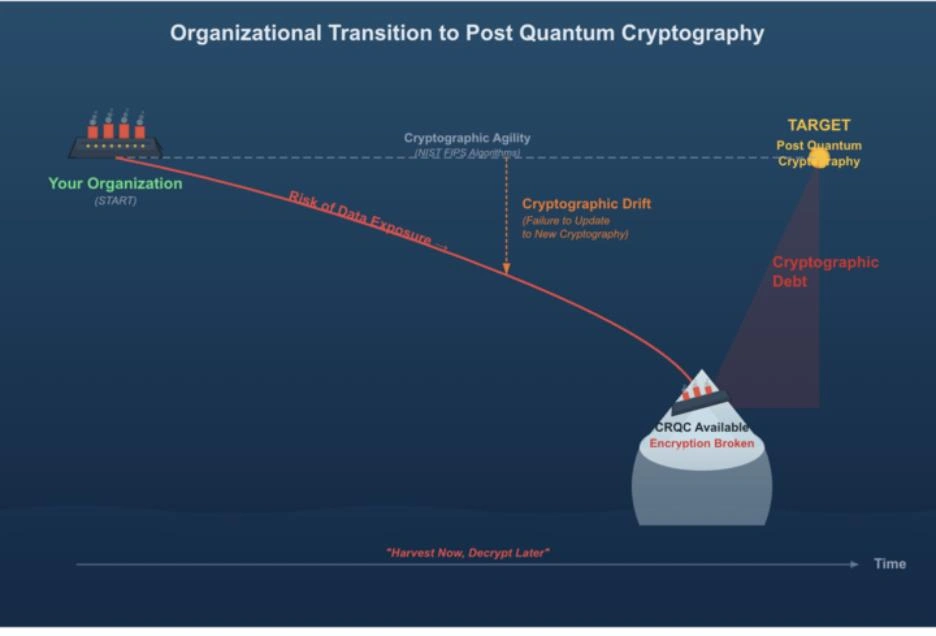
Any entity using digital networks to store sensitive data needs to transition away from classical cryptography toward post-quantum cryptography (PQC) standards. Organizations that fail to course correct, like the Titanic, risk drifting dangerously off course by maintaining the same classical cryptography instead of implementing new quantum-resistant algorithms that are already available.
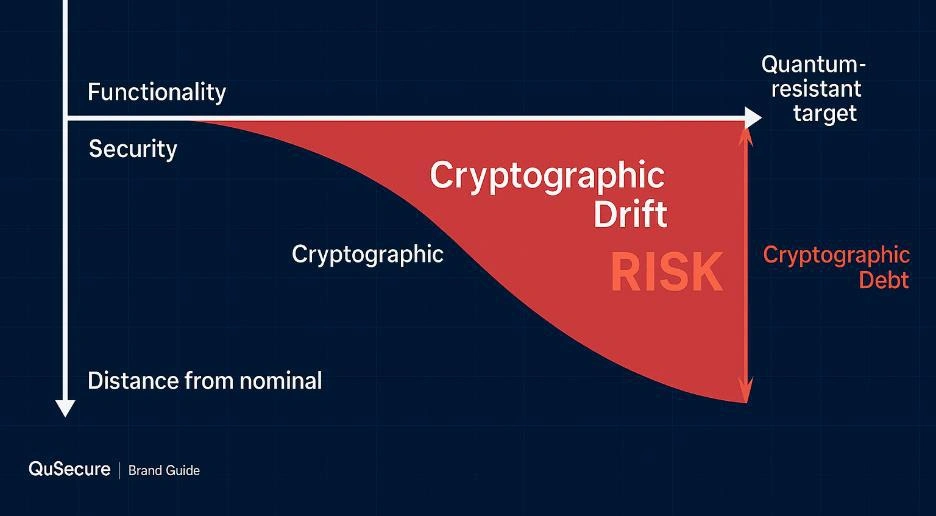
This lack of proactive course correction or what I call “cryptographic drift” creates what is now referred to as cryptographic debt—a burden that builds up until it may be too late to avoid disaster. One of the other perspectives to understand is that adversaries are constantly harvesting your data during the cryptographic drift and the slow implementation of PQC resistant algorithms will ease the adversarial burden to decrypt the data, once a CRQC becomes operationally available. The Titanic didn’t sink simply from drifting off course, but because it maintained high speed into a known ice field despite numerous warnings that never reached the captain. Everyone was too busy to act.
Sound familiar?
Understanding the Quantum Threat
Organizational management needs to understand what lies ahead in the cryptographic space of quantum computing. Advanced planning is essential to implement quantum-resistant algorithms before a cryptographically-relevant quantum computer (CRQC) arrives on the scene.
Proactive planning protects your organization from the possibility of a CRQC breaking all currently available public key encryption. Recent publications have accelerated the timeline for operational CRQCs to on or before 2030, exponentially increasing risk in three critical areas:
• Business operations disruption
• Data exposure and breaches
• Cost of emergency transition
Most forward-thinking organizations are already transitioning their encryption ahead of 2030, anticipating moderate impacts to these areas.
The Time to Act Is Now
My advice is simple: start changing course now.
Reactive planning – migrating only after it’s too late and your cryptography has been rendered void by a fault-tolerant quantum computer – will dramatically increase the risk of your organization ending up like the Titanic.
The warnings are here. The danger is real. The timeline is shorter than you think.
Don’t be too busy to change course.